Best software
Integrated QHSE software: separate systems, one IMS platform, or a spreadsheet?
ISO 9001:2026 retains the Harmonized Structure, which keeps it familiar and easier to integrate with other management systems. Compare separate tools, a shared spreadsheet and one integrated platform — without treating software as the management system.

Quality, environment and health and safety are often managed by different teams, with different records, even when the underlying work happens in the same place. ISO states that ISO 9001:2026 retains the Harmonized Structure used across ISO management system standards, which keeps it familiar and easier to integrate with other systems.1 That is a fact about the standards. It is not a requirement to buy a single software platform, and a platform is not, by itself, an integrated management system (IMS).
ISO 19011:2026 provides foundational guidance for organisations that take responsibility for auditing management systems such as ISO 9001.2 Whether you audit one discipline or several together is a programme decision. The tool should follow that decision.
What “integrated” has to mean
- Are responsibilities, processes and documented information actually shared where they should be, or only stored under one login?
- Can a change in one discipline be seen by the others — for example a process change that also affects a health and safety control?
- Can you still show the distinct legal and standard requirements that do not overlap?
- Will auditors and operators find one current picture of the work, or three official versions plus a spreadsheet?
- Is the design proportionate? A small organisation can integrate on paper more honestly than a large suite it never finishes implementing.
Three common approaches
Separate systems for each discipline
Separate tools can be a rational choice. A specialist environmental register or an incident system may fit its users better than a generic module. The cost is duplication and missed connections: the same process described three ways, the same action closed in one system and left open in another, and more work when you want a combined audit trail.2
Separate systems are not a failure if interfaces are deliberate and one record is clearly the record for each type of information.
A shared spreadsheet or unofficial “one file”
Some organisations try to integrate by putting everything in one workbook. It looks simple and it can work at a very small scale, with one careful owner.
It rarely survives more than one process owner, a certification cycle, or a need to show controlled documented information.1 The file becomes unofficial truth, while the official systems drift. That is the opposite of integration.
One IMS or QHSE platform
A single platform can hold shared processes, actions, audits and documents, which may match the Harmonized Structure’s intent to make integration easier.1 It can also support a combined audit programme if you have decided to run one.2
The risks are implementation scale, rigid workflows, and the illusion that buying the platform has already integrated the organisation. If teams still keep private lists, you have paid for a fourth system. Unused modules do not equal an IMS.

Side-by-side comparison
| Criterion | Separate specialist systems | Shared spreadsheet | One IMS or QHSE platform |
|---|---|---|---|
| Shared processes and responsibilities | Possible, if you design the interfaces | Looks shared; usually unofficial | Possible, if you redesign the work, not only the login |
| Documented information | Each system has its own library | Weak control and weak version history | Can be a single controlled library, if people use it |
| Combined audit trail | You assemble it by hand | Fragile, and hard to show as controlled evidence | Stronger, if the programme is actually run in the platform |
| Risk of conflicting records | High unless ownership is clear | Very high | Lower inside the platform; still high if shadow files remain |
| Effort to start | Medium (already running) plus interface work | Low, then growing hidden cost | High implementation, if the design is honest |
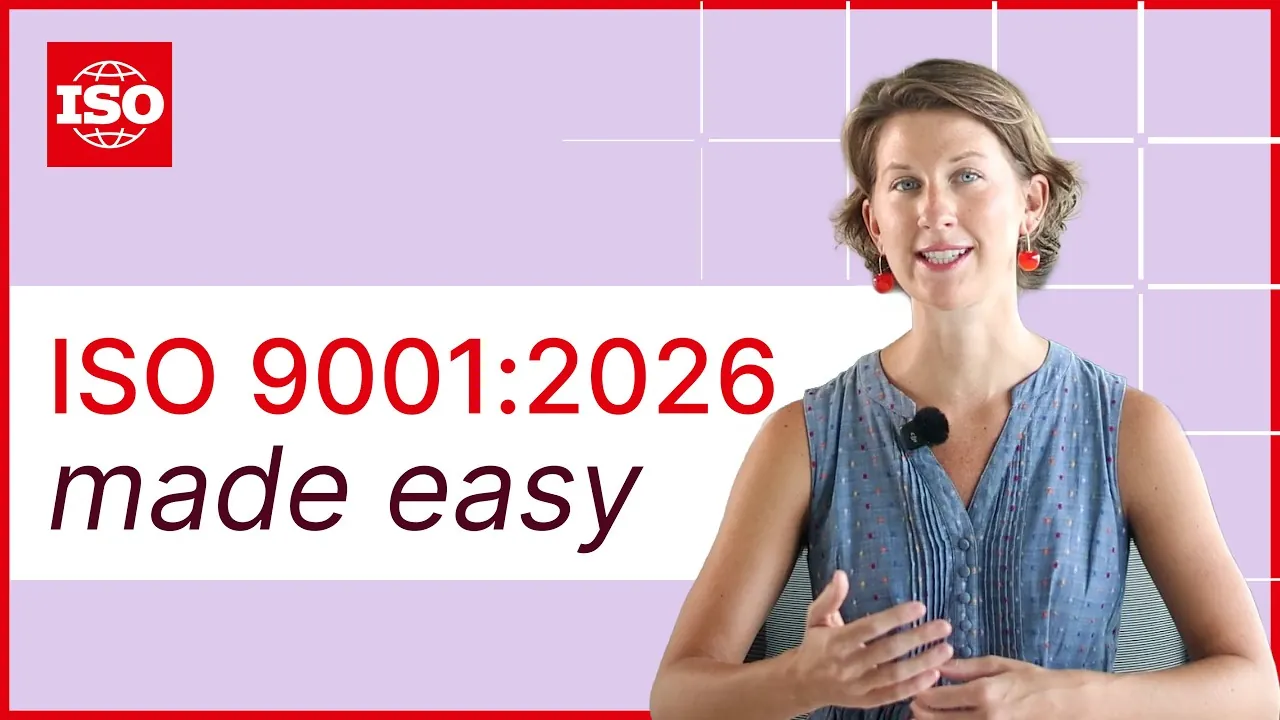
The official ISO film below introduces ISO 9001:2026. It is not a vendor demonstration of an IMS platform. It is here because the public summary of that edition is explicit about continuity and about the Harmonized Structure that makes integration with other management systems easier.
For a structured look at auditing quality, environment and health and safety together, see QHSE Integrated Management System Internal Auditor (ISO 9001, ISO 14001, ISO 45001). For the quality system itself, see also ISO 9001 Quality Management Awareness. These are independent awareness and exam-preparation courses. They are not official IRCA, ISO, NEBOSH or IOSH awards, and they are not a substitute for a licensed standard or for legal compliance.
A practical way to decide
Map the processes that are genuinely shared and the requirements that must remain distinct. If separate systems already exchange a clear, owned record, a single platform is optional. If you cannot see one current picture of a process that affects quality and health and safety together, integration of the work should come first; software may follow.
Do not confuse a common login with a common management system. ISO’s Harmonized Structure makes integration easier to design. It does not do the design for you.1
Frequently asked questions
Does ISO 9001:2026 make it easier to integrate with other systems?
ISO states that ISO 9001:2026 retains the Harmonized Structure used across ISO management system standards, which keeps it familiar and easier to integrate with other systems. That is a statement about the structure of the standards, not about a particular software product.
Is an integrated software platform the same as an integrated management system?
No. An integrated management system is how you design and run shared processes, responsibilities and documented information. Software can support that design. Buying one platform does not, by itself, integrate the way you work.
Can one audit programme cover more than one standard?
ISO 19011:2026 provides foundational guidance for organisations that take responsibility for auditing management systems such as ISO 9001. Whether you audit quality, environment and health and safety together is a programme decision. A tool should follow that decision, not force it.
Sources
Every factual statement marked with a number links to the source below. Sources were retrieved on 22 November 2026; check the publisher for later revisions.
- ISO 9001:2026: What businesses need to know (ISO) iso.org
- ISO 19011:2026 Released! (ISO/TC 176 news, 9 June 2026) committee.iso.org