Best practices
How to run a toolbox talk that workers remember
A short, two-way safety talk at the work face: how to choose today’s topic, prepare in minutes, check understanding, and follow up so the conversation actually changes the job.

A toolbox talk is a short, focused safety conversation at the work face, usually just before a task starts or at the beginning of a shift. It is not a classroom course and it is not a substitute for a risk assessment or a permit to work. Used well, it is how the people who will do the job confirm the hazards, the controls, and what to do if something changes.
Used badly, it becomes a one-way lecture, a signature on a pad, and a topic that has nothing to do with today’s work. This article sets out a practical way to choose a topic, prepare in a few minutes, keep the talk two-way, and follow up. It is general guidance. Follow your site rules and the law that applies where you work.
Why a short talk still matters
Health and safety law in Great Britain expects employers to consult workers or their representatives on health and safety matters. HSE’s worker-involvement guidance is built on the idea that people who do the work often see hazards first and have practical ideas for controlling them.1 A toolbox talk is one of the simplest ways to have that conversation where the work actually happens.
The same principle appears in international guidance. The International Labour Organization’s guidelines on occupational safety and health management systems ask organisations to make arrangements for workers and their representatives to be consulted, informed and trained so they can participate in the management system.2
A toolbox talk cannot replace those arrangements, but it can give them a daily rhythm: today’s task, today’s hazards, today’s controls, and a chance for someone to say “that is not how this job is going to work”.
Choose a topic that belongs to this job
The most useful talks are tied to the work in front of you. Good starting points include the risk assessment or job hazard analysis for the task, the conditions on a permit, a near miss from the same activity, a change of method or equipment, or weather and access conditions that have changed since the last time the job was done.
Generic topics have a place — slips, manual handling, or housekeeping — but they work better when you connect them to this site, this shift and this crew. If the crew is about to open a line, talk about isolation and residual energy, not a recycled presentation on office fire exits.
Prepare in minutes, not in a slide deck
You do not need a long script. Before you gather the crew, be able to answer four questions out loud:
- What are we doing, and what is different today?
- What could hurt someone, including people nearby?
- What controls must be in place before work starts, and who checks them?
- What should anyone do if the job changes or a control fails?
Have the relevant permit, isolation certificate or assessment with you if the job requires one. If you cannot explain the controls clearly, the job is not ready for a talk — it is not ready to start.

Deliver a two-way talk, then check understanding
Keep it short enough that people stay with you, and structured enough that nothing important is missed. A simple sequence is: the job, the hazards, the controls, the emergency arrangements, then questions. Ask the crew to describe the critical steps back to you, rather than only asking “any questions?” at the end. Silence is not the same as understanding.
Give people a genuine chance to stop the job. If someone raises a missing control, an unexpected isolation, or a language or access problem, deal with it before work starts. A talk that cannot change the plan is only a briefing, not a control.
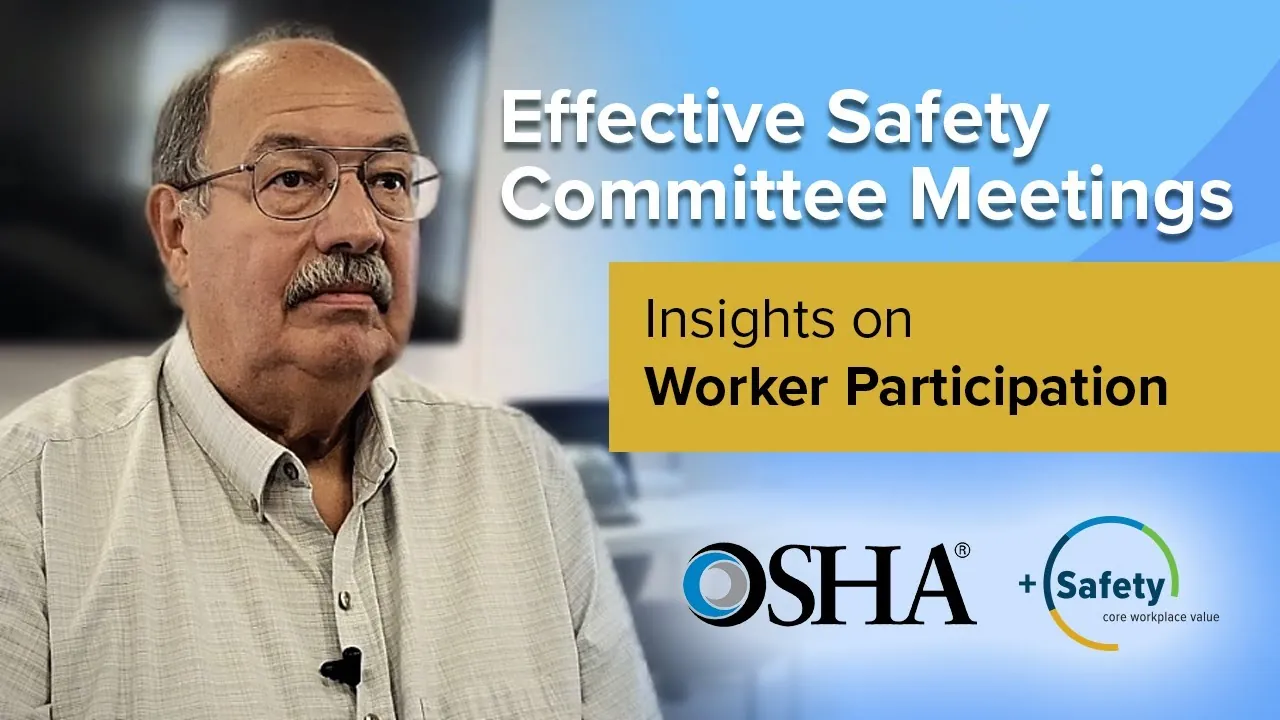
The United States Department of Labor has published a short film on effective safety committee meetings. The setting is a formal committee rather than a five-minute huddle, but the point is the same: a safety conversation works when workers can raise concerns and see that those concerns lead to action.3
Record what matters, and follow up
A record should show the topic, the date, the names of the people present, and any actions agreed. It is there so you can prove who was briefed and so open actions do not disappear. It is not a substitute for the talk itself. If the same action appears week after week, the talk is documenting a problem rather than helping to fix it.
Follow up on the actions you took, and feed anything new into the risk assessment or permit process. If a talk reveals that a control in the written assessment does not work on site, the assessment is now out of date.
If you want a structured way to prepare and deliver a short two-way talk, our free course walks through topic choice, delivery and follow-up. Free course: Running an Effective Toolbox Talk. For ready-to-run talks with a quiz and a sign-in sheet, see the academy’s toolbox talks pack.
What usually goes wrong
Talks fade when they always use the same topic, when only supervisors speak, when the record is signed by people who were not there, or when they are held far from the job so that nobody can point to the actual equipment. They also fail when contractors are left out, or when the talk is given in a language that some of the crew cannot use well enough to challenge a control.
Build a short rotation of task-specific talks, keep a simple attendance record, and treat every serious question as a reason to check the plan. That is how a five-minute conversation earns its place in the control measures.
Frequently asked questions
How long should a toolbox talk last?
Long enough to cover the job, the hazards, the controls and the emergency arrangements, and short enough that people stay engaged. Many site talks take only a few minutes when they are focused on today’s task.
Is a signed attendance sheet enough?
No. A record is useful, but the talk only works if people understood the controls and could challenge them. Follow up the actions you agree.
Can a toolbox talk replace a risk assessment or a permit?
No. It should confirm the assessment or permit for this job, not stand in for them.
Should contractors join the talk?
Yes, if they will do or be affected by the work. A talk that leaves out part of the crew leaves out part of the risk.
What if someone raises a problem during the talk?
Stop and deal with it before the job starts. A talk that cannot change the plan is only a briefing, not a control.
Sources
Every factual statement marked with a number links to the source below. Sources were retrieved on 21 November 2026; check the publisher for later revisions.