New technology
Hydrogen at work: treating it as a dangerous substance under DSEAR
Hydrogen is a flammable gas. In Great Britain, DSEAR requires employers to assess fire and explosion risks from dangerous substances and to eliminate or reduce those risks so far as is reasonably practicable. A CSB investigation film shows how a hydrogen leak was mistaken for nitrogen.

Hydrogen is a flammable gas. In workplaces that manufacture, store, convey or use it, that simple fact should drive the risk assessment. In Great Britain there is no need to wait for a hydrogen-specific statute before acting: the Dangerous Substances and Explosive Atmospheres Regulations (DSEAR) are already the primary legislation for controlling substances that can cause fires and explosions at work.1
DSEAR requires employers to assess the risks of fires and explosions that may be caused by dangerous substances, and then to eliminate or reduce those risks so far as is reasonably practicable. The aim is to protect employees and other people who may be put at risk, such as visitors and members of the public. The regulations complement the general duty to manage risks under the Management of Health and Safety at Work Regulations. Since 2015, DSEAR also covers risks from gases under pressure and from substances that are corrosive to metals.1
When DSEAR applies, and what an explosive atmosphere is
Apart from certain activities involving ships, DSEAR applies whenever work is being carried out by an employer or a self-employed person, a dangerous substance is present or is liable to be present at the workplace, and that substance could be a risk to people’s safety as a result of fires, explosions or similar energetic events, or through corrosion to metal.1
HSE’s brief guide, INDG370, defines dangerous substances as any substances used or present at work that could, if not properly controlled, cause harm to people as a result of a fire, explosion or similar incident, such as an uncontrolled chemical reaction. It defines an explosive atmosphere as a mixture of a dangerous substance or substances (gas, mist, dust or vapour) with the air, which has the potential to catch fire or explode. An explosive atmosphere does not always result in an explosion but, if it does catch fire, the flames travel quickly; in a confined space, the rapid spread of the flames or a rise in pressure could also cause an explosion.2
Hydrogen fits that framework as a flammable gas. HSE’s examples of activities covered by DSEAR already include the use of flammable gases, such as acetylene, for welding, deliveries from road tankers, and the handling, storage and use of gases under pressure.1 A hydrogen supply, process or filling installation should be assessed on the same basis, not treated as an exception because the gas is also discussed in energy-policy documents.

What the risk assessment needs to cover
INDG370 says you should carry out a DSEAR risk assessment as part of the overall workplace risk assessment required under the Management of Health and Safety at Work Regulations, and that you should do so regardless of the quantity of dangerous substances. The assessment includes identifying the dangerous substances present, including those that may be formed in the workplace; potential ignition sources; the work activities involving the substances; the possible formation and extent of explosive atmospheres; and the scale of the anticipated effects. You then eliminate or reduce the risks so far as is reasonably practicable — for example by reducing quantities, avoiding or minimising releases, and controlling releases at source — and you review the assessment when substances, quantities, equipment or processes change.2
Fires and explosions create harmful physical effects: thermal radiation, overpressure and oxygen depletion. HSE also notes that other energetic events, and the rupture of systems containing gases under pressure, can cause comparable harm.1 For hydrogen, leaks, inadequate ventilation, unmarked pipework and the assumption that an escaping gas is inert are therefore not side issues; they belong in the assessment of ignition, release and explosive atmosphere.
A recorded investigation, not a slogan
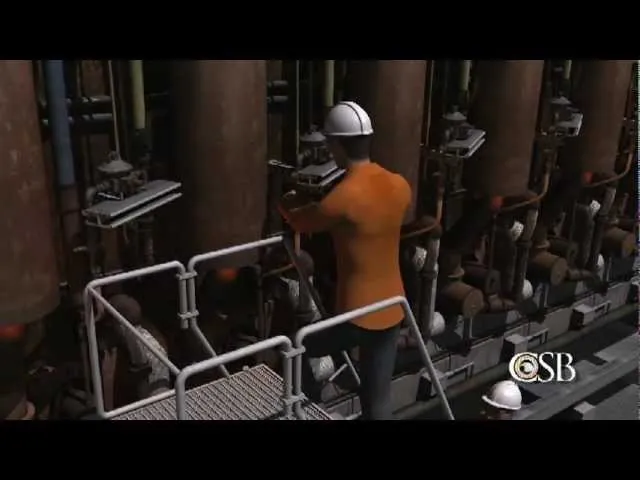
The US Chemical Safety and Hazard Investigation Board (CSB) investigated three combustible-dust incidents over a six-month period at the Hoeganaes facility in Gallatin, Tennessee, which produced powdered iron. The investigation found that the incidents resulted in fatal injuries to five workers.3 The CSB film Iron in the Fire covers that investigation. It includes a hydrogen leak that ignited after workers assumed the gas might be nitrogen and did not test for flammable gas, and it also covers combustible iron dust. The film is not a hydrogen-only briefing, and it is not a dust-only briefing; both materials were part of what the Board examined. It is a US investigation of a specific site, not a statement of Great Britain law, but it is a clear official warning against assuming the identity of a leak.
Want a structured introduction to hydrogen hazards and controls, with a knowledge check at the end? Our free course Hydrogen Safety Awareness is built for that purpose. For the fire and emergency arrangements that sit alongside a dangerous-substances assessment, see Fire Safety & Emergency Preparedness. These are independent Academy courses, not official HSE or CSB awards, and they are not a substitute for a DSEAR risk assessment of your own workplace or for a licensed copy of any standard you choose to apply.
What usually goes wrong
Hydrogen controls fail when a leak is assumed to be an inert gas and is not tested, when DSEAR is treated as something that applies only to petrol or solvents, or when the formation and extent of an explosive atmosphere are never estimated. They also fail when the assessment is not reviewed after a change of process, quantity or equipment, which is a step INDG370 requires.2 If you work outside Great Britain, the same physical properties still matter, but the duties you must meet will be those of your own regulator.
Frequently asked questions
Is there a hydrogen-specific HSE statute that this article relies on?
No. In Great Britain, DSEAR is already the primary legislation for controlling substances that can cause fires and explosions at work. This article does not cite a separate HSE hydrogen code, because the hydrogen path sometimes quoted on the open web is not a live HSE page.
What is an explosive atmosphere, according to INDG370?
HSE defines it as a mixture of a dangerous substance or substances (gas, mist, dust or vapour) with the air, which has the potential to catch fire or explode. An explosive atmosphere does not always result in an explosion but, if it does catch fire, the flames travel quickly.
What does the CSB film Iron in the Fire cover?
It covers the CSB investigation of three combustible-dust incidents over six months at the Hoeganaes facility in Gallatin, Tennessee, which resulted in fatal injuries to five workers. The film includes a hydrogen leak that ignited after workers assumed the gas might be nitrogen, and it also covers combustible iron dust.
Are the Academy courses official HSE or CSB awards?
No. They are free, independent Academy courses, not official HSE or CSB awards, and they are not a substitute for a DSEAR risk assessment of your own workplace.
Sources
Every factual statement marked with a number links to the source below. Sources were retrieved on 22 November 2026; check the publisher for later revisions.
- Dangerous Substances and Explosive Atmospheres Regulations (DSEAR) — background (HSE) hse.gov.uk
- Dangerous substances and explosive atmospheres: A brief guide to the Dangerous Substances and Explosive Atmospheres Regulations (INDG370, HSE) hse.gov.uk
- Hoeganaes Corporation Fatal Flash Fires (US Chemical Safety and Hazard Investigation Board) csb.gov