Best practices
Working at height: plan the job so a fall is not the plan
HSE’s hierarchy for work at height — avoid, prevent, minimise — and how to plan access, collective protection, harnesses, ladders, inspections and rescue before anyone leaves the ground.

Work at height is work in any place where, if precautions were not taken, a person could fall a distance liable to cause personal injury. That is the way HSE describes it, and it includes work above or below ground level, on roofs, ladders, scaffolds, fragile surfaces and edges, and work where someone could fall through an opening.1 It is not only “high” work. Short falls still kill and seriously injure people, especially when the landing is onto a hard surface, a protruding object or moving plant.
In Great Britain the Work at Height Regulations 2005 set out a clear hierarchy: avoid work at height where you can; where you cannot, prevent falls; and where a residual risk remains, minimise the distance and consequences of a fall.1 HSE’s short guide INDG401 is a practical summary of those duties for anyone who organises or carries out work at height.2
Start with the hierarchy, not with a harness
Avoidance comes first. Can the job be done from the ground, from a designed platform, or by bringing the work down? Prefabrication, cleaning systems, or siting equipment so that it can be maintained without climbing are all forms of avoidance.
If the work must be done at height, prevent a fall with collective protection where you can: a proper scaffold, a mobile elevating work platform used within its limits, guard rails, or covers over openings that are secured and marked. Collective measures protect more than one person and do not depend on someone remembering to clip on.
Personal fall protection — a harness and lanyard, or a work-restraint system — has a place when collective measures are not reasonably practicable, or as a back-up. It only works if the anchorage is sound, the equipment is suitable, the user is trained, the equipment is inspected, and there is a plan for rescue if someone does fall and is left suspended.
Plan the job, including access and rescue
HSE expects work at height to be planned, supervised and carried out by competent people, and to use the most suitable equipment.1 A useful plan answers more than “how do we get up?” It should cover:
- The weather, lighting and surface conditions, including wind and fragile materials such as roof lights.
- How tools and materials will be taken up and kept from falling on people below.
- Exclusion zones under the work.
- How the structure or equipment will be inspected before use.
- What happens if someone falls, is injured on a platform, or cannot get down.
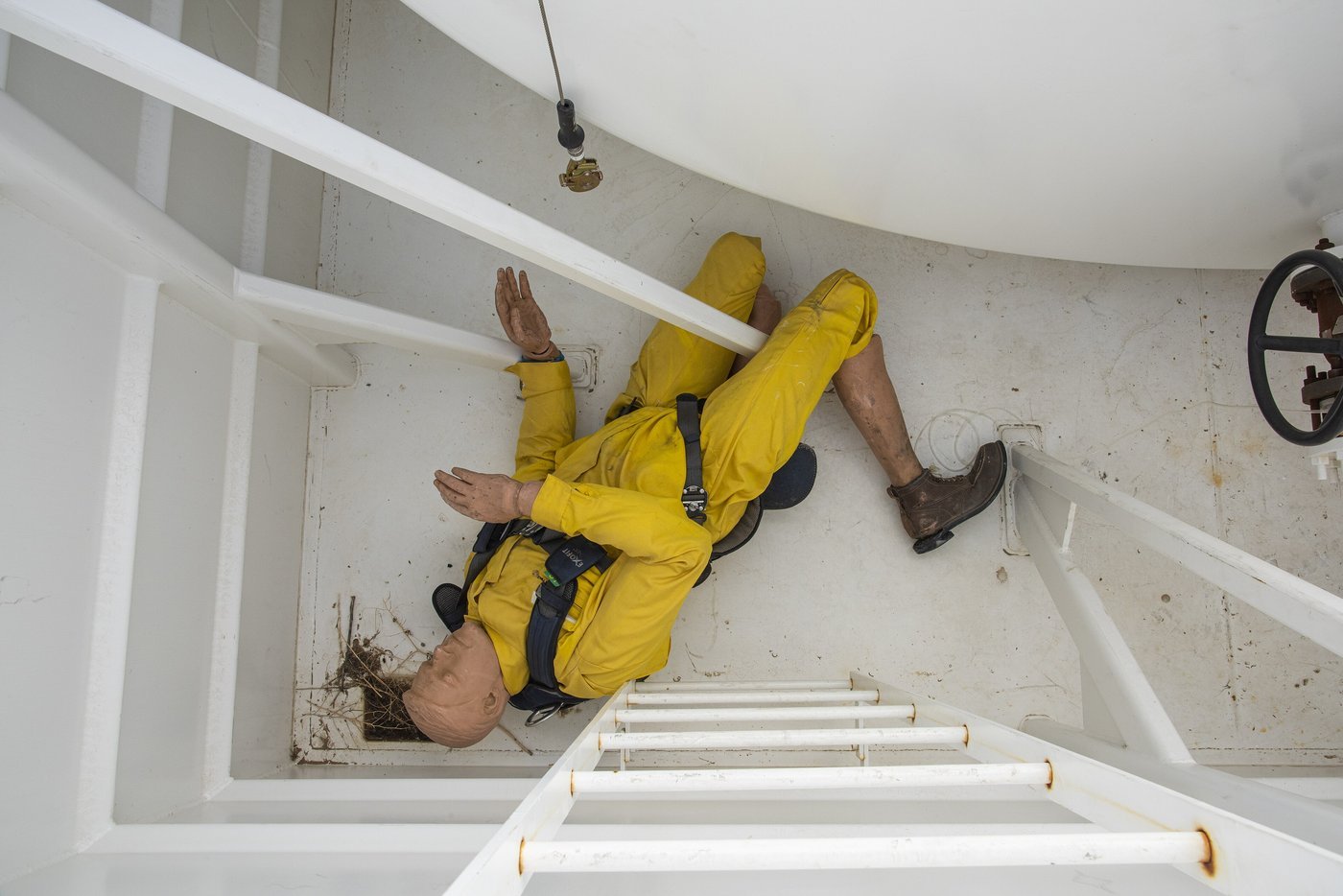
Rescue is often missing from the plan. A person hanging in a harness cannot be left until the emergency service arrives as the only option, unless that has been thought through and is realistic for the location. If you cannot describe a rescue that would work here, the fall-arrest system is incomplete.

Ladders, scaffolds and “it will only take a minute”
Ladders and stepladders are not banned, but they are easy to misuse. HSE’s guidance is that they can be used for short-duration, low-risk work when a better option is not justified, and when they are used on a firm, level base, at a suitable angle, and with three points of contact where that is required.2 If you need both hands for the task, or you will be on the ladder for a long time, it is probably the wrong equipment.
Scaffolds and towers must be erected, altered and dismantled by competent people, inspected at the required intervals, and not “improved” on the day with loose boards or missing guard rails. If you work on or near a scaffold, treat those defects as a reason to stop, not as a site habit.
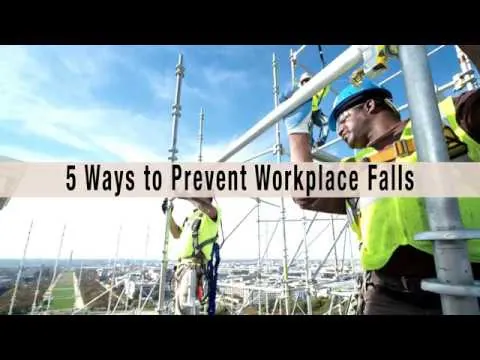
In the United States, OSHA’s fall-prevention campaign includes a short official film, 5 Ways to Prevent Workplace Falls, which emphasises planning, the right equipment, training and inspection.3 Some numerical triggers in US rules, such as a height threshold for when fall protection is required, are specific to OSHA standards and should not be copied into a UK or other assessment without checking your own law. The planning habits in the film still travel well.
For awareness training on planning work at height and using access equipment more safely, see our free courses Working at Height and Scaffolding Safety, and the academy risk page at working at height.
What to look at before the job starts
Walk the task in your mind, then on the ground. Where could a person fall, and onto what? What is the first control in the hierarchy that would actually work here? Who inspected the platform, ladder or harness, and when? Who is below? If the weather turns, who decides to stop? Those questions take a few minutes. They are the difference between a planned job and a climb that only looks routine.
Frequently asked questions
Is work at height only work on roofs or tall structures?
No. HSE includes any place where a person could fall a distance liable to cause personal injury, including openings, fragile surfaces and some work at relatively low height.
What is the legal hierarchy in Great Britain?
Avoid work at height where you can; where you cannot, prevent falls; and where a residual risk remains, minimise the distance and consequences of a fall.
Are ladders banned?
No. HSE guidance allows them for short-duration, low-risk work when they are the right equipment and are used correctly. They are easy to misuse.
Does a harness replace planning?
No. A harness is personal protection. It needs a sound anchorage, training, inspection and a rescue plan, and it sits after avoidance and collective prevention in the hierarchy.
Can I use OSHA’s six-foot rule on a UK site?
No. That kind of numerical trigger is specific to certain US standards. Use the law and guidance that apply where you work.
Sources
Every factual statement marked with a number links to the source below. Sources were retrieved on 21 November 2026; check the publisher for later revisions.